You’ve scrolled past another “mindfulness” app. Another digital detox challenge. But your hands still itch for something real—something tactile, fast, and gloriously analog. Here’s the truth: most adults dismiss slot car racing as a child’s toy. They’re wrong. Slot car racing for adults isn’t nostalgia—it’s resistance against the numbness of infinite scroll.
Why Your First Track Setup Probably Failed
You bought a $40 starter set from a big-box store. Ran it twice. Now it’s gathering dust in the garage. Sound familiar? Mass-market kits are built for shelf appeal—not performance, precision, or adult attention spans.
And here’s the kicker: those flimsy plastic tracks warp with humidity. Controllers lack fine throttle control. Cars deslot at 15 mph like they’ve seen a ghost. It’s not you—it’s the gear. Most “adult” options are just repackaged kid stuff with darker packaging.
How to Build a Serious Slot Car Racing Setup (Without Wasting Money)
Forget plug-and-play. Real slot car racing for adults demands intentionality. Start with scale, then power, then tuning. Skip anything labeled “entry-level.”
Selecting Your Scale: 1:32 vs. 1:24
1:32 is the sweet spot for home use—compact, affordable, and massive aftermarket support. Go 1:24 only if you’ve got dedicated space and don’t mind louder motors and pricier parts. Pro tip: narrower lanes = tighter racing = more adrenaline.
Track Material Matters More Than You Think
Rubberdog racers swear by routed wood tracks with copper braid. Why? Consistent conductivity, zero warping, and that satisfying *thrum* when a car hits 60 scale mph. Plastic snap-together? Save it for birthday parties.
Controllers: Analog Precision Over Digital Gimmicks
Digital throttles feel like driving with oven mitts. Analog, variable-resistance controllers let you feather the power through apexes. Spend here. Your lap times—and sanity—will thank you.
| Component | Budget Path (Under $200) | Serious Racer Setup ($500+) |
|---|---|---|
| Track Base | Snap-together plastic (Scalextric) | Custom routed MDF with copper braid |
| Power Supply | 12V wall adapter | Regulated 18V variable DC supply |
| Controller | Basic resistive trigger | Brake-enabled analog (e.g., Professor Motor) |
| Car Tuning | Stock out of box | Magnet removed, gears polished, tires trued |
The Industry Secret: Magnet Removal Changes Everything
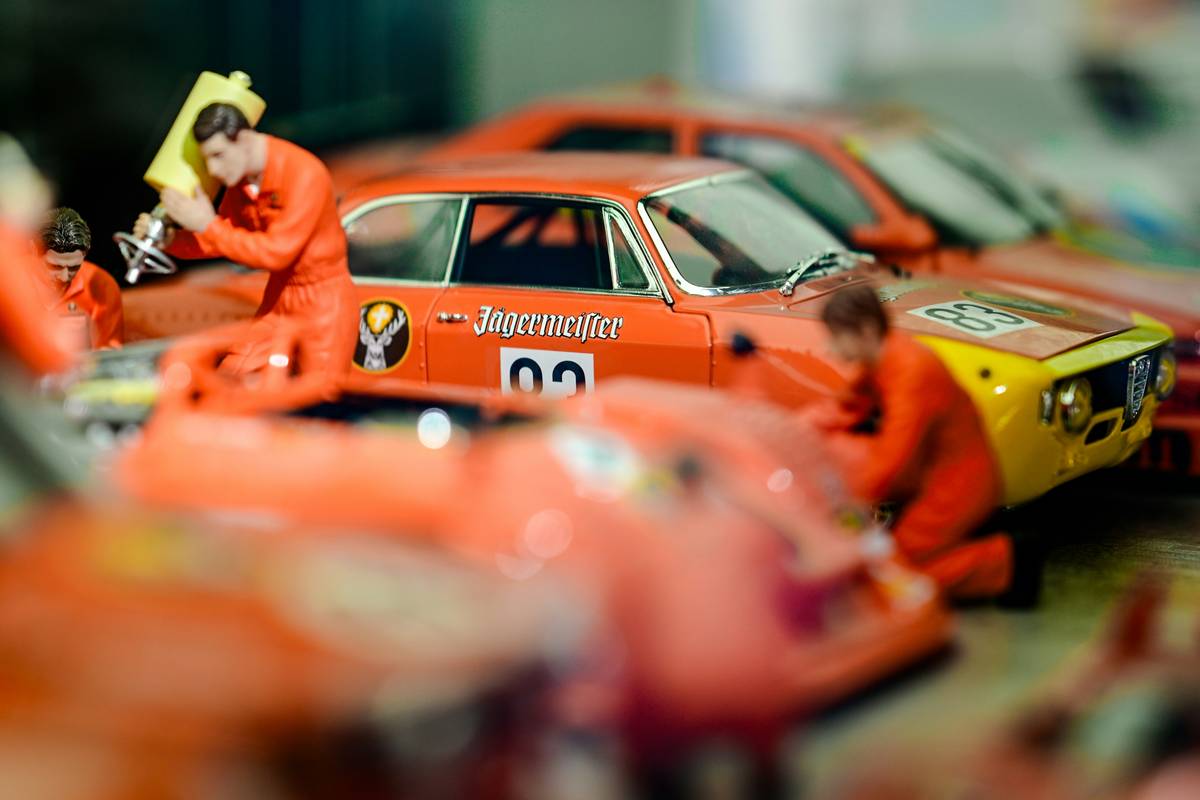
Most commercial sets glue a magnet under the chassis to “keep cars on track.” Sounds helpful—until you realize it kills realism. Real cars don’t stick to asphalt. Remove that magnet, and suddenly you’re managing weight transfer, cornering balance, and slide control like a real driver. Yes, you’ll spin out more. And yes, that’s the point. The learning curve is steep—but the payoff is pure mechanical empathy. No simulator delivers this. Not even close.
FAQ
Is slot car racing for adults expensive?
No—if you avoid gimmicks. A solid 1:32 setup starts around $300. Compare that to karting fees or sim rig costs. It scales with your obsession, not your rent.
Can I race with friends at home?
Absolutely. Dual-lane tracks support head-to-head racing. Add lane changers for tactical overtaking. Just ban phone cameras—you’ll want full focus.
Where do adults actually race slot cars?
Local clubs hide in plain sight—check hobby shops, maker spaces, and even church basements. National events like the USRA Championships draw serious competitors. It’s a quiet subculture that thrives offline.
This isn’t about collecting toys. It’s about reclaiming agency—over speed, over space, over attention. Build your track. Tune your car. Feel the current in your fingertips. The rubber dog doesn’t bark… but your pulse will.