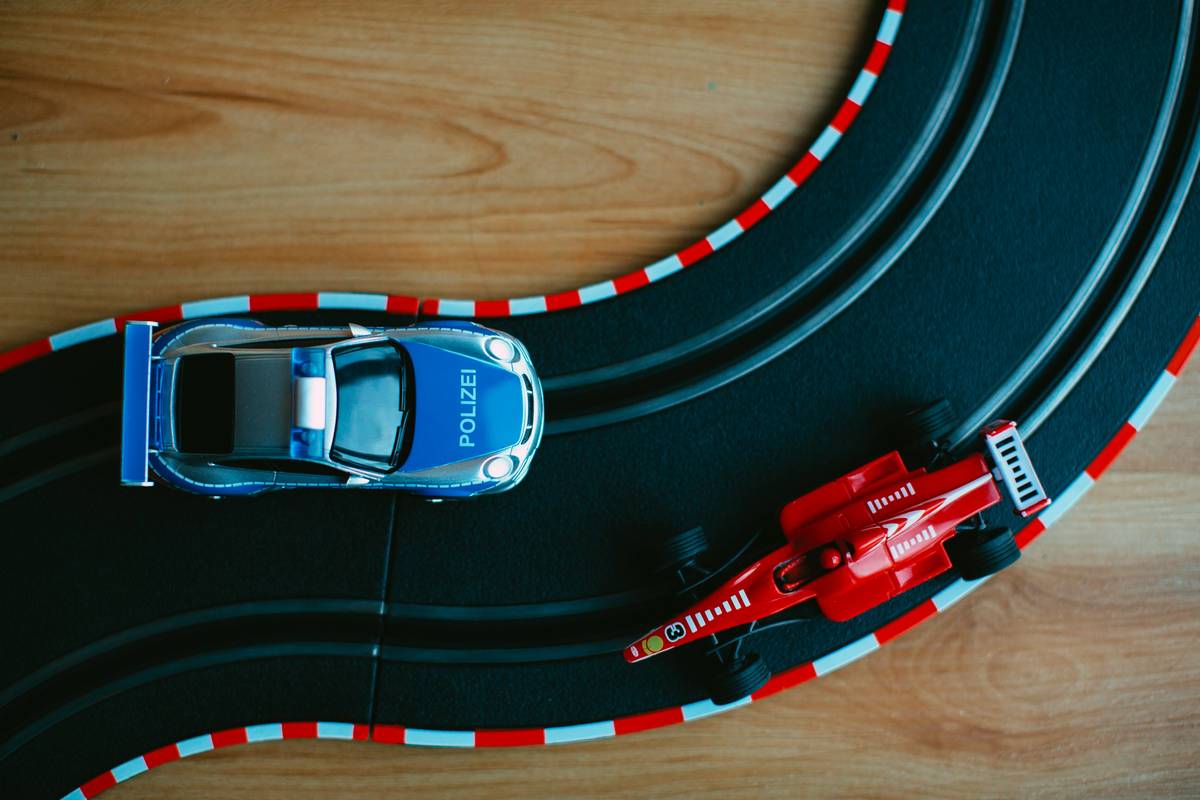
You’ve seen toy race cars—but not like this. Most people assume slot car racing is just another outdated kids’ toy gathering dust in a garage. But that’s dead wrong. The truth? It’s a precision-driven, adrenaline-fueled hobby blending engineering finesse, hand-eye coordination, and real-world physics. What is slot car racing, really? It’s analog speed in a digital age—and it’s making a serious comeback.
Why “Just Plug and Play” Doesn’t Cut It Anymore
Back in the ’60s, slot car sets were impulse buys at department stores—cheap plastic tracks, flimsy controllers, and underpowered chassis. That legacy haunts the hobby today. Newcomers plug in a $30 set, expect Le Mans-level thrills, and bail when cars deslot on every curve. And honestly? They’re right to be disappointed.
The problem isn’t the concept—it’s the execution. Modern slot car racing demands balance. Power delivery. Track conductivity. Tire grip. Ignoring any one of these turns your race into a demolition derby. Worse, most beginner kits hide critical specs behind vague marketing terms like “high-speed” or “realistic racing.”
What Is Slot Car Racing: A Practical Starter’s Blueprint
Forget nostalgia goggles. To actually enjoy this hobby, you need a system—not just toys. Here’s how serious enthusiasts build their setups without burning cash or patience.
Selecting Your Scale: 1:32 vs. 1:24
Scale isn’t just about size—it dictates budget, space, and realism. 1:32 dominates homes (fits on dining tables). 1:24? That’s for garages and clubhouses. Bigger scale = heavier cars = more stable cornering but needs serious room.
Track Types: Plastic Clip-Together vs. Wood Routed
Pre-molded plastic tracks are convenient but noisy, bouncy, and limit layout creativity. Wood-routed tracks—custom-cut MDF with copper braids—are smoother, quieter, and allow banked turns. Yes, they cost more. But once you’ve raced on routed wood, you won’t go back.
Controllers That Actually Respond
A cheap trigger controller gives you binary input: off or full throttle. Real control comes from rheostat-based units with adjustable braking and sensitivity. Look for brands like Parma or Professor Motor—they’re built for finesse, not just function.
| Component | Budget Tier ($50–$150) | Enthusiast Tier ($200–$500) | Pro Tier ($600+) |
|---|---|---|---|
| Track Material | Plastic clip-together (e.g., Scalextric ARC) | Modular MDF with pre-cut slots | Custom routed MDF with copper braid & banking |
| Controllers | Basic trigger (on/off) | Adjustable brake + sensitivity dial | Electronic controllers with PWM and programmable profiles |
| Cars | Factory-sealed, fixed gear ratio | User-replaceable motors & tires | Hand-built brass chassis, custom windings, silicone tires |
| Power Supply | Wall adapter (12V/1A) | Regulated 18V/3A bench supply | Dual-channel isolated supplies per lane |
The Industry Secret No Brand Admits
Here’s an unspoken truth: the slowest part of your car isn’t the motor—it’s the guide flag. That little plastic fin underneath? If it’s too long, it drags in the slot. Too short, and you deslot mid-corner. Most factory cars ship with generic guides sized for average tracks. But real performance tuning happens when you trim that flag by half a millimeter and test. Suddenly, your lap times drop. The math is simple: friction kills speed. Reduce unnecessary contact points—guide, braid, rear axle—and you gain milliseconds that compound over 20 laps. Veteran racers keep a micrometer and X-Acto knife in their pit box. Not because they’re obsessive—but because they know slot car racing rewards microscopic precision.
Frequently Asked Questions
Is slot car racing still popular today?
Yes—but it’s niche. Clubs thrive globally, especially in Europe and Australia. Online communities share layouts, mods, and race results daily. It’s less mainstream, more passionate.
Can adults enjoy slot car racing, or is it just for kids?
It’s overwhelmingly adult-driven now. The average hobbyist is 35–60 years old. Kids love it too, but serious racing—like time trials and endurance events—is adult territory.
How much space do I need to start?
A basic oval fits on a 4×6 ft table. But modular systems let you expand vertically or fold away. Start small. You don’t need a basement—just a weekend and curiosity.