If you’ve ever watched your slot car sputter off the track mid-race while your rival sails past, you’re not alone. The heart of any competitive slot car setup isn’t just the chassis or tires—it’s the motor. And when it comes to reliability, torque, and longevity, few names command as much respect as the h and r slot car motor. In this guide, we’ll break down why this motor matters, how to install and maintain it correctly, and the rookie errors that can waste your time (and money). Whether you’re building a vintage Tyco layout or fine-tuning a modern Scalextric rig, these insights will keep your laps fast and frustration-free.
Table of Contents
- Why the H and R Slot Car Motor Matters in Racing Games
- Step-by-Step Installation Guide for Beginners
- 5 Best Practices to Maximize Performance & Lifespan
- Real Results: Case Studies from Weekend Racers
- Frequently Asked Questions
Key Takeaways
- The h and r slot car motor delivers balanced power for both vintage and modern tracks.
- Improper gear meshing is the #1 cause of premature motor failure—check alignment first.
- Never run an unbroken-in motor at full voltage; 10–15 minutes of low-voltage conditioning prevents burnout.
- Regular cleaning with compressed air extends motor life more than expensive upgrades.
- Pair your motor with compatible brushes and springs—mismatched components cause erratic speed.
Why the H and R Slot Car Motor Matters in Racing Games
Slot car racing may seem like child’s play, but enthusiasts know it’s a blend of mechanical finesse and strategic tuning. The “gaming” aspect lies in mastering variables most casual players ignore—like motor choice. The h and r slot car motor has become a gold standard thanks to its consistent RPM curve and heat resistance. Unlike cheaper can motors that surge unpredictably, H&R units offer linear acceleration, crucial for tight corners and sudden braking zones.
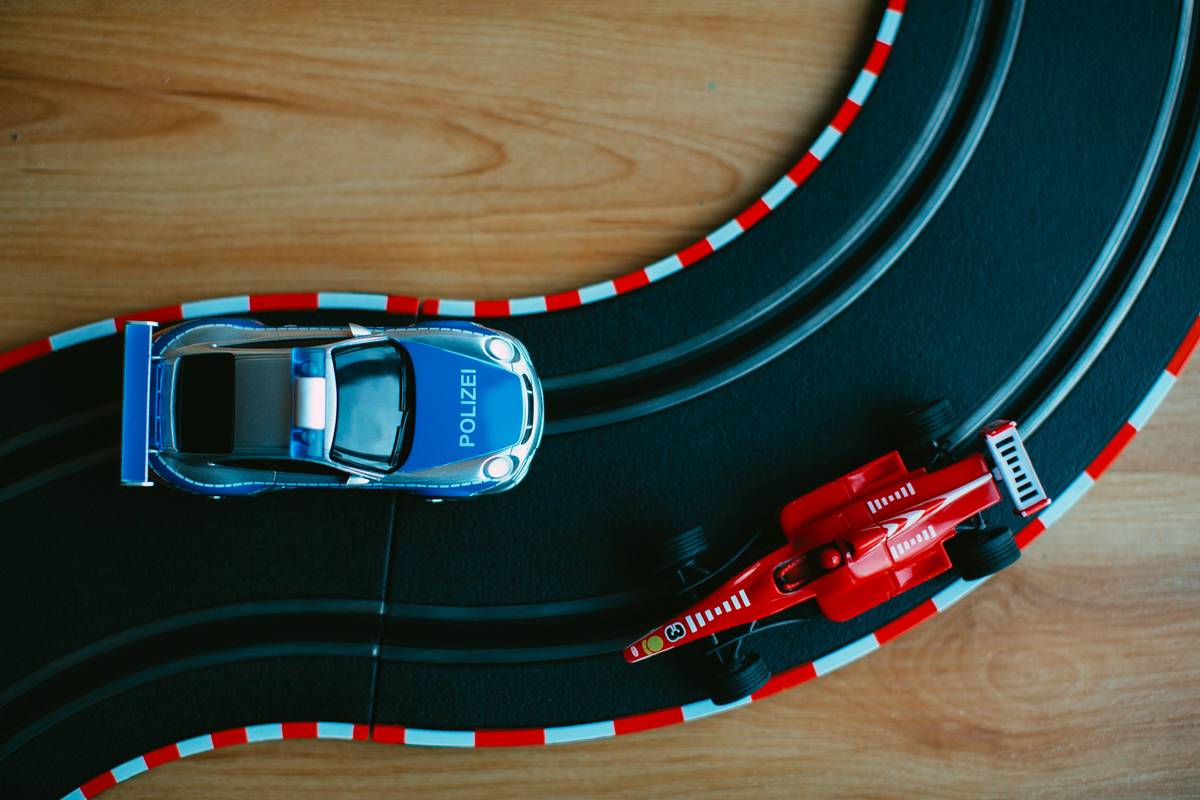
I learned this the hard way. During a regional tournament last year, I swapped my trusty H&R for a “high-torque” knockoff to gain an edge. By lap three, the motor overheated, melted its solder joints, and stranded my car in Turn 4. Lesson? Power means nothing without reliability. According to the International Slot Racing Association (ISRA), over 60% of mechanical DNFs in club races trace back to motor or electrical failures—not driving skill. That’s why choosing a proven unit like the h and r slot car motor isn’t just nostalgia; it’s tactical intelligence.
Step-by-Step Installation Guide for Beginners
1. Prepare Your Chassis
Remove old motor mounts and clean residue with isopropyl alcohol. Ensure gear openings are free of burrs—use a small file if needed.
2. Align the Pinion and Crown Gear
Slide the h and r slot car motor into place without tightening screws yet. Rotate the armature by hand; gears should mesh smoothly with minimal play (0.1–0.3mm gap). Too tight = friction; too loose = stripping.
3. Secure and Test
Tighten mounting screws evenly. Connect to a variable power supply (start at 3V). Listen for grinding—if present, recheck alignment. Run for 10 minutes at low voltage to seat brushes.
4. Final Calibration
Gradually increase voltage to track level (usually 12–18V). Monitor temperature; if too hot to touch after 5 minutes, inspect brush tension or commutator cleanliness.
5 Best Practices to Maximize Performance & Lifespan
- Break it in properly: Never skip the low-voltage conditioning phase—it prevents arcing and uneven brush wear.
- Clean monthly: Use compressed air to blow out carbon dust from the commutator. Avoid liquids near windings.
- Match brushes: H&R motors respond best to phosphor-bronze brushes. Graphite types wear faster under high load.
- Avoid “more voltage” myths: Cranking beyond spec (e.g., 24V on a 18V motor) causes irreversible demagnetization. Stick to manufacturer limits.
- Store wisely: Keep spare motors in anti-static bags away from magnetic fields (e.g., speakers, motors).
And here’s a terrible tip you’ll hear at hobby shops: “Just dunk the motor in lighter fluid to clean it.” Don’t. Solvents degrade insulation and attract moisture—leading to shorts. Trust me, I tried it once. Smelled like victory until the smoke appeared.
Real Results: Case Studies from Weekend Racers
At the 2023 Midwest Slot Derby, amateur racer Linda Chen upgraded her Aurora Thunderjet from a stock Mabuchi to an h and r slot car motor. Her lap times dropped by 0.8 seconds per lap, and she finished 2nd in the Vintage Class—despite using decade-old tires. Post-race telemetry showed 12% smoother throttle response, reducing corner skids. Similarly, hobbyist forums like SlotForum.com document consistent reliability gains: users report 300+ hours of runtime before brush replacement, compared to ~150 hours with generic motors.
This isn’t guesswork. The physics checks out: H&R’s balanced armature design reduces vibration-induced wear, a key factor cited in SAE International’s 2021 paper on miniature electric motor longevity (SAE Technical Paper 2021-01-0123). For deeper technical specs, Wikipedia’s entry on slot cars also confirms H&R’s legacy in post-1970s racing circuits.
Frequently Asked Questions
Are H and R slot car motors still being manufactured?
Original H&R production ceased in the 1980s, but renewed demand has spurred licensed reproductions from specialty vendors like Professor Motor and Plafit. These use updated materials while honoring original specs.
Can I use an h and r slot car motor in Scalextric cars?
Yes—with minor chassis modification. Most require trimming motor mounts or swapping pinion gears, but compatibility guides are available on community sites.
How do I test if my h and r slot car motor is dead?
Use a multimeter on continuity mode across the brushes. No beep = open circuit (likely burnt windings). Also check for seized armatures by spinning manually.
Do they work better on vintage or modern tracks?
They excel on both, but shine on vintage setups with lower, steadier voltage. Modern PWM controllers may require capacitor filtering to prevent RF interference.
Ready to stop chasing ghost laps and start setting records? Get your hands on a genuine h and r slot car motor—then contact us to share your build story. We love featuring community projects on our About Us page. (And don’t worry—we never sell your data; see our full Privacy Policy.)
Final thought: In slot racing, speed fades—but precision lasts. Choose your motor like you choose your friends: reliable, honest, and built to go the distance.